They Were Here First: The Trans and Gender-Diverse Ancestors Woven Into Dharmic Traditions
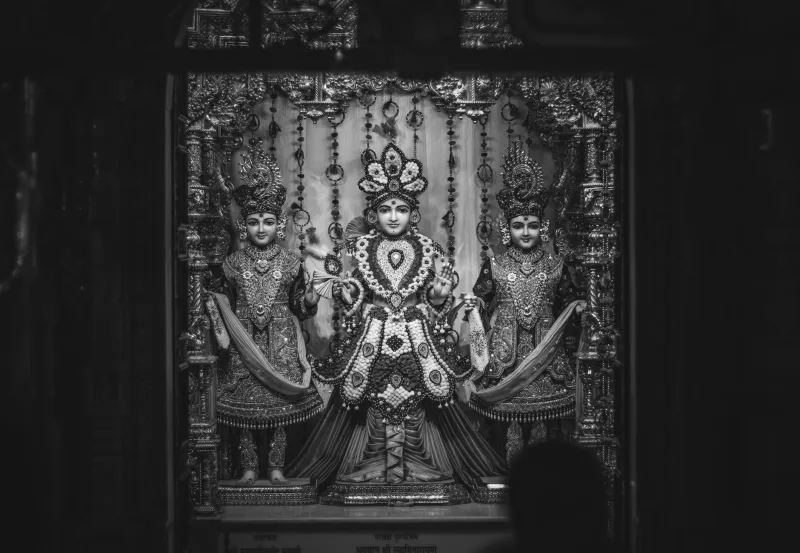
There's a story that gets told about Eastern spirituality and gender diversity — usually by people who haven't looked very hard. It goes something like this: traditional Hindu and Buddhist cultures are conservative about gender, gender diversity is a Western concept, and trans people seeking spiritual home in dharmic traditions are importing something foreign.
That story is wrong. And the evidence against it is ancient, abundant, and genuinely beautiful.
The dharmic traditions of South and Southeast Asia have always contained multitudes when it comes to gender. Deities who shift between male and female forms. Sacred communities of gender-diverse people whose spiritual authority predates most Western nations. Buddhist teachers who challenged gender essentialism centuries before the word "transgender" existed. These are your ancestors — and their stories have been waiting for you.
Ardhanarishvara: The God Who Is Half Goddess
Let's start at the top. One of the most iconic images in Hindu iconography is Ardhanarishvara — a composite deity who is literally half Shiva and half Parvati, split down the middle. The right side is typically depicted as masculine, the left as feminine, the two joined seamlessly in a single divine body.
Ardhanarishvara isn't a curiosity or a footnote. This deity appears in major temple complexes across India, is celebrated in classical dance traditions, and is invoked in serious theological discussions about the nature of ultimate reality. The image encodes a profound teaching: that the divine contains and transcends gender, that masculine and feminine are not opposites but aspects of a unified whole.
For trans and non-binary Hindus and Hindu-adjacent practitioners, Ardhanarishvara represents something radical — a sacred image of a body that defies the binary, elevated to the level of the divine. "When I first really looked at Ardhanarishvara," says Priya Nair, a non-binary Hindu practitioner in the San Francisco Bay Area, "I felt seen in a way I hadn't in years of Sunday school or yoga studios. That image is me. That image has always been there."
Bahuchara Mata and the Hijra Tradition
The hijra community of South Asia — a group with a history spanning at least two millennia — occupies a unique and complex sacred role in Hinduism. Hijras are typically assigned male at birth but live outside the gender binary, often identifying with feminine or third-gender identities. In traditional Hindu culture, hijras were considered to possess spiritual power (shakti) precisely because of their gender difference — they were believed to carry blessings and curses with equal potency.
Bahuchara Mata, a goddess worshipped widely in Gujarat and across the hijra community, is central to this tradition. According to devotional lore, she is the patron deity of hijras and blesses those who renounce conventional gender to live in her service. Hijra gurus initiate disciples in lineages that stretch back generations, passing down ritual knowledge, devotional practice, and community care.
It's worth being honest about complexity here: the hijra community has also faced significant marginalization, including during British colonial rule, which criminalized "eunuchs" under laws that weren't repealed until relatively recently. The tradition is not without its shadows. But the core of it — a gender-diverse community with recognized spiritual authority, a patron goddess, and an unbroken lineage — is a form of trans dharma that has existed for longer than most American institutions.
Vishnu's Shape-Shifting: Mohini and the Fluidity of the Divine
In the Mahabharata and the Puranas, Vishnu — the Preserver, one of the three primary deities in Hinduism — takes the form of Mohini, a supremely beautiful woman, on multiple occasions. In one famous episode, Mohini distracts the demons during the churning of the cosmic ocean, allowing the gods to claim the nectar of immortality. In another, Shiva himself falls in love with Mohini, and their union produces the deity Ayyappan, worshipped across South India.
Mohini is not a disguise or a trick in the shallow sense — she's a genuine divine form, one that Vishnu inhabits fully. This is a god who moves between genders as an expression of divine power and purpose. The sacred can become feminine. The masculine divine is not locked in.
For trans women and femmes in Hindu-influenced spiritual communities, Mohini offers something rarely found in Western religious traditions: a theological precedent for the sacred feminine existing within a being who can also be masculine. Your femininity is not a departure from the divine. It might be one of its expressions.
Kuan Yin: Buddhism's Most Beloved Bodhisattva of Fluid Gender
In East Asian Buddhism — which has deeply influenced American Buddhist communities — Kuan Yin (also Guanyin or Avalokitesvara) is the bodhisattva of compassion and one of the most widely venerated figures in the Buddhist world. What many practitioners don't realize is that Kuan Yin's gender has been fluid across traditions and centuries.
In early Indian Buddhist texts, Avalokitesvara is depicted as male. As the tradition moved into China, the figure gradually became feminine — partially through cultural translation, partially through a theological logic that compassion transcends gender. In many traditional artistic depictions, Kuan Yin is deliberately ambiguous — soft-featured, graceful, neither clearly male nor female.
Buddhist scholar and trans teacher Dr. Jetsunma Tenzin Palmo has written about how Kuan Yin's gender fluidity reflects a deeper Mahayana teaching: that the bodhisattva takes whatever form is needed to reach suffering beings. Gender is not fixed. It is responsive. It is skillful means.
For trans Buddhists in the US, Kuan Yin is more than an interesting historical footnote. She/they is an active devotional presence in millions of American homes, temples, and altars — a trans ancestor hiding in plain sight.
Modern Lineage Holders: Trans Teachers Carrying the Dharma Forward
The ancestors aren't only historical. There are living teachers and community leaders doing the work of trans dharma right now, and their contributions deserve recognition alongside the mythological and ancient.
Reverend Zenshin Florence Caplow is a Soto Zen priest and one of the editors of The Hidden Lamp, an anthology of women's stories in Zen Buddhism. While not trans herself, her work has created space for trans practitioners in Zen communities across the US and has influenced how American Buddhism thinks about gender and embodiment.
Keshav Das is a trans Hindu practitioner and Vaishnava devotee who has written and spoken publicly about reclaiming Hindu identity as a trans person, challenging both Western converts who dismiss trans identity and South Asian communities who claim the tradition doesn't have room for trans people. "The tradition has always had room for us," he's said. "We just had to remind people."
There are also countless unnamed teachers — hijra gurus, queer Buddhist meditation instructors, non-binary Ayurvedic practitioners — who carry this lineage in their daily work, often without institutional recognition.
Why This History Matters for Your Practice Right Now
Knowing this history isn't just academically interesting. It's spiritually nourishing in a way that can be hard to quantify but easy to feel.
When you sit in meditation and invoke compassion, you're sitting in a lineage that has included Kuan Yin's gender-fluid grace for over a thousand years. When you practice yoga and feel the interplay of masculine and feminine energies in your body, you're touching something Ardhanarishvara has been embodying since before the Common Era. When you find community in a dharmic tradition and feel like you belong, you're joining a lineage of gender-diverse practitioners that no colonial law and no cultural forgetting has ever fully erased.
You didn't arrive late to dharma. You came home.
If you want to explore these traditions further, we recommend The Yoga of the Mahabharata for Hindu mythological context, The Hidden Lamp for women and trans voices in Zen, and the work of scholars like Serena Nanda on the hijra community. And if you know of trans dharmic ancestors we haven't mentioned here — tell us. This lineage is still being written.