When the Mirror Turns Hostile: 5 Quick Dharmic Rituals for Hard Dysphoria Days
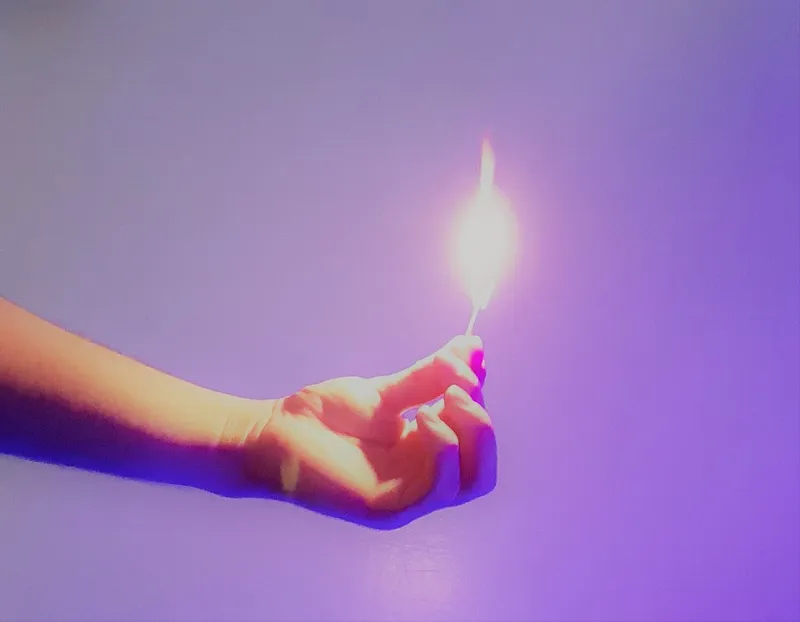
Photo: Aaron Lucas, CC BY-SA 4.0, via Wikimedia Commons
Some mornings, dysphoria doesn't whisper. It shouts. The mirror becomes an interrogation room, your clothes betray you, and your own body feels like a stranger who moved in without asking. If you know that feeling, this list is for you.
These five rituals come from Buddhist and Hindu practice traditions, but you don't need a meditation cushion, a guru, or any background whatsoever. Each one takes fifteen minutes or less. Do one. Do all five. Bookmark this for the hard days.
1. Loving-Kindness, Aimed at Your Own Skin
The practice: Sit or stand wherever you are. Place a hand on your chest or arm — somewhere that feels okay to touch. Say silently: "May I be at peace in this body. May I be safe here. May I be kind to myself today." Repeat three to five rounds, slowly.
Why it works: Metta (loving-kindness) practice rewires the default relationship between you and your own form. Dysphoria is, at its core, a relationship rupture with the body. Metta is relationship repair — repeated in small doses until the hostility softens.
2. The Water Reset
The practice: Run cool water over your wrists and the back of your neck for sixty seconds, or step outside and let rain touch your face. If you're home, take a full shower and imagine the water naming you correctly as it touches you.
Why it works: Water rituals (abhisheka, ritual bathing, snan) appear across dharmic traditions as acts of cleansing and renewal. Sensory grounding through water also interrupts the anxiety loop dysphoria triggers. You are washed. You are named. You begin again.
3. One Mantra, Out Loud
The practice: Choose one phrase and repeat it aloud or under your breath for two minutes. Options: Om Shanti (peace), Om Namah Shivaya, or a plain-English affirmation like "This body is mine and I am staying."
Why it works: Mantra occupies the verbal mind — the same channel dysphoria uses to run its commentary. You can't fully think the cruel thoughts and chant at the same time. It's a hijack of the hijacker.
4. The Five-Breath Body Scan (Dysphoria Edition)
The practice: Instead of scanning for tension, scan for function. Five breaths, five acknowledgments: My legs carry me. My hands create. My lungs sing. My heart endures. My self remains. Skip the parts of your body that feel off-limits today. This is not about forcing peace with every inch.
Why it works: Traditional body scans ask you to befriend everything at once, which can feel impossible mid-dysphoria. This version practices gratitude for what the body does rather than how it looks — a doorway, not a demand.
5. Light a Candle for Your Future Self
The practice: Light a candle (a phone flashlight in a dark room works too). Sit with it for three minutes and silently say: "I light this for the person I am becoming. I don't have to be there yet."
Why it works: Dharmic traditions honor the deity-in-progress — the understanding that becoming is itself sacred. Dysphoria insists you must be elsewhere, other, already. This ritual gently refuses the deadline. The flame is a promise, not a judgment.
A Note for the Worst Days
If dysphoria is persistent, crushing, or paired with thoughts of self-harm, these practices are companions — not substitutes — for real support. The Trans Lifeline runs 877-565-8860 in the US. Reach out. You deserve more than coping; you deserve care.
But for the ordinary hard mornings — the ones that come and go — these small acts are a way of saying: I'm not leaving myself today. That's not a small thing. That's practice.