Spiritual Community Is Healthcare: Finding or Building a Sangha That Gets It
Photo: Faisallutpat2, CC BY 4.0, via Wikimedia Commons
Let's make an argument up front: your spiritual community is part of your healthcare. Not metaphorically. Research consistently shows that social connection predicts mental health outcomes, resilience, and even longevity — and for trans people, who face elevated rates of isolation, family estrangement, and religious trauma, the stakes are higher. Many of us lost two communities at once: the congregation we grew up in and the family that sat beside us in the pews.
A sangha — the Buddhist word for spiritual community — can help fill that hole. But not just any sangha. You deserve one that doesn't ask you to check your transition at the door.
What a Real Affirming Community Looks Like
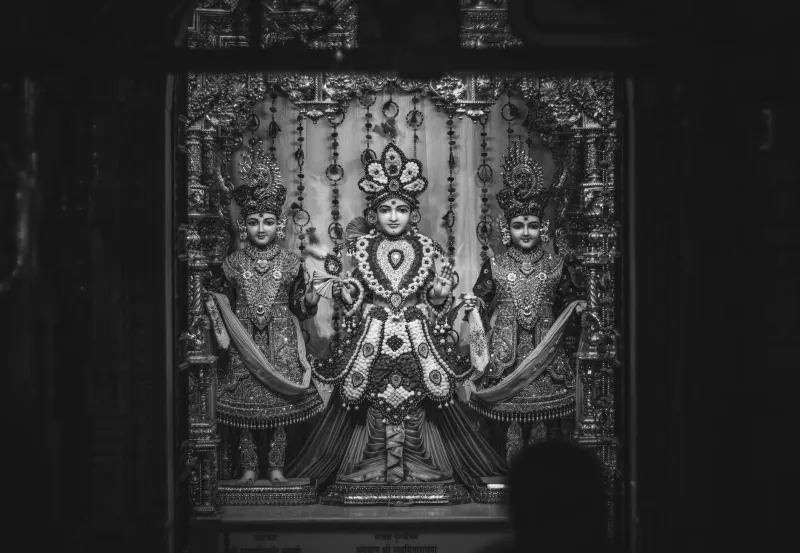
The good news: dharmic communities in the US are often further along on gender inclusion than many mainstream religious spaces. Many Buddhist centers, Hindu temples, and kirtan groups practice a tradition whose own histories include gender-diverse figures — from the klibaka of ancient texts to the diverse depictions of Ardhanarishvara, half Shiva and half Parvati, wholeness beyond the binary.
In a healthy community, you'll notice:
- Your name and pronouns are used without ceremony. Not perfectly, maybe, but with genuine effort and correction when someone slips.
- Nobody asks invasive questions about your body, surgeries, or "the decision" — especially not in the parking lot after service.
- Leadership addresses harm, even awkwardly. When someone misgenders you, a teacher or facilitator steps in so you don't have to do the emotional labor.
- You're ordinary. Not a mascot, not a "test case," not the diversity quota. Just a person on the cushion.
Red Flags Worth Trusting
Some signals should move you toward the exit:
- "We see everyone as beyond gender." Sounds enlightened; often means "stop asking to be seen." Non-dual teachings about transcending the self should never erase your lived reality.
- "Don't make this political." Your existence isn't politics, and a community that treats naming it as divisive has already chosen a side.
- Hierarchies that resist questions. Any teacher who demands deference, discourages you from talking to other members, or claims special access to truth is a risk — and trans folks, often isolated, are prime targets for high-control groups.
- Love with conditions. If warmth arrives only when you're quiet about who you are, that's not warmth. That's tolerance on a leash.
Questions to Ask Before You Walk In
A quick email or DM can save you a painful evening. Try:
- "Is your community LGBTQ-affirming in practice, not just in principle?"
- "Are there other trans or non-binary members?"
- "Are restrooms gender-neutral?" (Practical. Matters.)
- "Does anyone in leadership share this background, or is allyship the model here?"
How they answer — speed, specificity, humility — tells you as much as the answers themselves.
No Affirming Sangha Nearby? Build the Circle.
Most of the US is not a coastal city. If the nearest affirming dharma group is three hours away, here's a blueprint for starting a peer-led circle:
1. Start with two. You and one friend. That's a valid sangha. The Buddha's first community was small.
2. Keep the structure simple. Twenty minutes of silent sitting, twenty minutes of reading a short teaching, twenty minutes of open sharing. Rotate facilitation so no one becomes the authority.
3. Meet where you're safe. Libraries, queer community centers, coffee shop back rooms, or video calls. Many rural trans folks run thriving circles entirely online.
4. Set agreements in writing on day one. Confidentiality, pronoun respect, no advice-giving unless asked. Small covenants prevent big wounds.
5. Let it grow slowly. Post in local LGBTQ Facebook groups, at the community health center, on campus boards if you're near a school. Growth by invitation tends to protect the culture you built.
The Dharma You Deserve
The historical Buddha taught under trees to communities of outsiders — people who had left, or been left by, the structures they were born into. If that's you, you're not a guest in this tradition. You're its lineage.
Find your people. Or gather them. Either way: don't do this alone.