The Sacred Power of Being Called by Your True Name

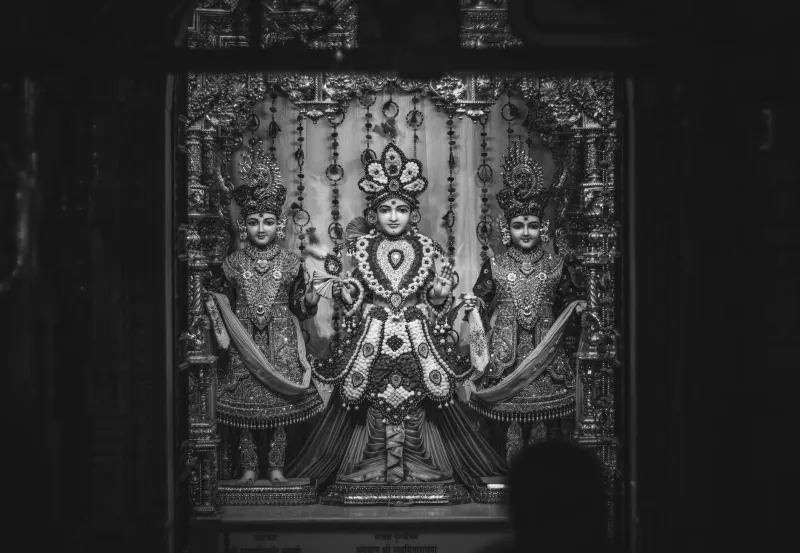
Photo by Photo by Eddie Wingertsahn on Unsplash on Unsplash
There's a moment that almost every trans person knows. Someone — a friend, a stranger, a cashier at a coffee shop — uses your name. Your name. And something in your chest moves.
It's easy to dismiss that feeling as purely psychological, a relief response after years of misalignment. But what if it's also something older than that? What if being called by your true name is, as many dharmic traditions have always understood it, a genuinely sacred act?
Names as Spiritual Technology
Across Hindu, Buddhist, Sikh, and Jain traditions, naming has never been treated as a casual administrative matter. It has been understood as a form of invocation — a way of calling something real into being.
In Hindu tradition, the namakarana ceremony marks a child's formal naming, typically on the twelfth day after birth. The name is chosen with care, often tied to an astrological chart, a deity's name, or a quality the family hopes to cultivate. The ceremony is understood as the first formal introduction of the child's soul to the world. The name, in this framework, isn't a label — it's a resonance. It shapes how the universe addresses you.
In Buddhist traditions, students who take refuge or receive ordination are often given a Dharma name — a new name that reflects their spiritual aspiration or the teacher's recognition of their essential nature. The act of renaming is explicitly an act of transformation. The old name belonged to a version of the person who had not yet committed to the path. The new name belongs to who they're becoming.
Sikh traditions hold the Amrit Sanchar initiation ceremony, after which initiates add Singh (lion) or Kaur (princess/prince) to their names — a shared name that transcends individual ego and binds them to a community of equals.
The thread running through all of these? Names mark thresholds. They honor change. They make transformation visible and communal.
Trans Naming Is Already a Dharmic Act
When a trans person chooses their name, they're doing something that rhymes deeply with these traditions — whether they're aware of it or not.
The process is rarely casual. Most trans people spend weeks, months, sometimes years sitting with names, trying them on internally, feeling for resonance. They think about meaning, sound, ancestry, aspiration. They imagine who they'll be when they're fully seen by that name.
That's not just preference. That's discernment. That's the same careful attention that a Hindu family brings to namakarana, the same receptivity a Buddhist student brings to receiving a Dharma name from their teacher.
"I chose a name that meant 'new dawn' in Sanskrit," says Priya, a Hindu trans woman in Houston. "I didn't think of it as a spiritual act at the time. But looking back, I was doing exactly what my tradition does — I was naming the version of myself that was being born."
Creating Your Own Naming Ceremony
You don't need a temple, a priest, or a formal lineage to mark your name change as sacred. You need intention, a little time, and maybe a few people who love you.
Here are some frameworks to consider:
Solitary intention-setting. Before you start using your name publicly, or when you first receive your legal name change, take some time alone with it. Light a candle. Write the name down. Speak it aloud to yourself. In yogic tradition, the repetition of a sacred word — japa — is understood to build energetic resonance over time. Saying your name to yourself, with intention, is a form of this.
A small gathering ritual. Invite the people who matter most to you. Ask each of them to say your name aloud — just once, clearly, with presence. No speeches required. This simple act of being called by your name, witnessed by community, carries enormous weight. It echoes the communal dimension of namakarana and refuge-taking ceremonies.
Writing a name letter. Some trans people find it meaningful to write a letter to their former name — not with bitterness, but with acknowledgment. That name carried you for a while. It kept you safe, or it was the best approximation available. Releasing it consciously, with gratitude rather than erasure, is a dharmic act in itself.
Creating a name altar. In Hindu and Buddhist home practice, altars serve as focal points for intention and memory. Consider creating a small space that holds your new name alongside symbols of what it means to you — a deity you feel connected to, a piece of nature, a photo, a written aspiration.
What Spiritual Communities Can Do
For teachers, sanghas, yoga studios, and dharmic communities: this section is for you.
Honoring a trans community member's chosen name isn't just courtesy. In the frameworks your tradition already holds, it is a spiritual act. When you use someone's chosen name, you are participating in their namakarana. You are recognizing their soul's nature. You are saying: I see who you are becoming, and I call you by that name.
This means updating records promptly. It means not using old names even in historical contexts without permission. It means, when someone shares that they've changed their name, responding with something more than a nod — perhaps with the kind of acknowledgment you'd offer any significant spiritual threshold.
Some communities have begun creating small naming ceremonies within their existing ritual life: a moment in a puja, a dedication in a meditation session, a blessing offered during a community gathering. These don't need to be elaborate. They need to be sincere.
You Were Always Your Name
In many dharmic cosmologies, the soul isn't created at birth — it arrives with a nature already present, moving through forms and lifetimes in search of fuller expression. Your chosen name, in this light, isn't something invented. It's something recognized.
The paperwork will catch up. The legal system will eventually reflect what's already true. But the spiritual reality? That was established the moment you knew your name.
Say it again. It's yours.